How to Run Digital Lock-Out/Tag-Out with Mandatory Confirmations
Share article
Quick answer: Digital lockout tagout (LOTOTO) replaces a paper tag and a signature with a mandatory, in-sequence confirmation on the technician's device: every isolation step has to be confirmed before the next one unlocks, and the system auto-captures who did it, when, and what was isolated. Nothing moves to "safe to work" until every step is confirmed, and the record is written the moment it happens, not reconstructed from memory afterward.
Digital lockout tagout software exists because paper LOTO has one structural weakness: it depends on a person filling in a tag correctly. Digital work instructions close that gap for lockout/tagout the same way they do for changeover or assembly, by turning a written procedure into an enforced digita sequence that a technician can't get through without confirming each step. For an operation running LOTOTO across multiple energy sources, multiple shifts, and multiple technicians, that difference between "the procedure says" and "the technician did" is the entire compliance and safety case.
What is digital lockout/tagout (LOTOTO)?
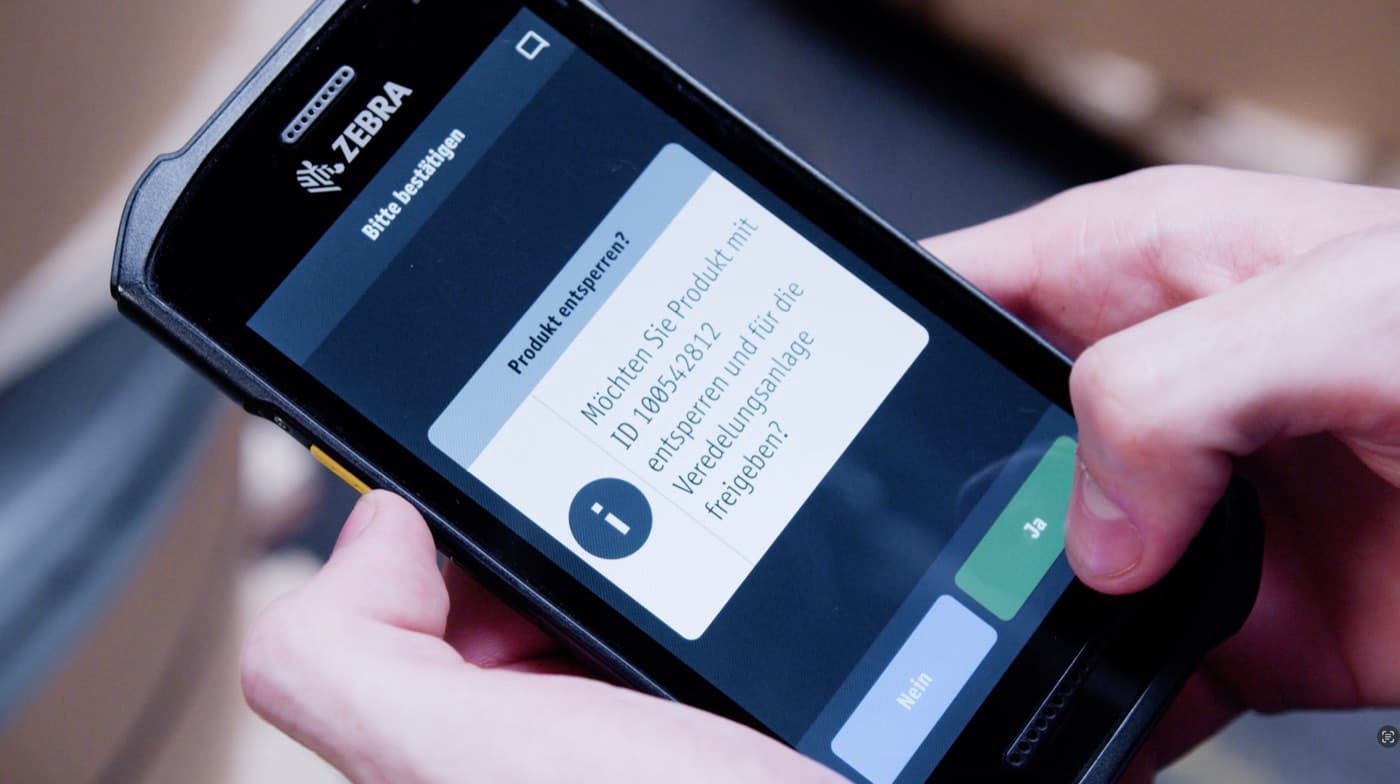
The same energy-control procedure runs through a device-based workflow instead of a paper tag, log sheet, or laminated card, which is what "digital" adds to LOTOTO. The energy control procedure required under OSHA 29 CFR 1910.147 still applies: identify the energy sources, isolate them, apply lockout devices, verify zero energy, and only then authorize work. What changes is how each of those steps gets confirmed and recorded. Instead of a technician writing their initials on a tag hanging from a valve, they confirm the step on a smartphone, tablet, or industrial smartwatch, and the system timestamps it, attaches their identity, and won't advance to the next step until it happens.
How does digital LOTOTO differ from paper-based lockout/tagout?
Paper lockout/tagout and digital lockout/tagout describe the same regulatory procedure, but paper only proves a technician had the form. It doesn't prove they read it, followed the sequence written on it, or checked for a second energy source the procedure listed but the technician forgot about under time pressure. A digital LOTOTO workflow enforces order: the isolation step for hydraulic pressure has to be confirmed before the electrical isolation step becomes available, and the machine can't be marked ready to run again until every technician who applied a lock has removed it. The paper version can be filled in after the fact, from memory. The digital version can't, because the confirmation is what unlocks the next screen. Additionally, media rich confirmation steps can also be added, like images or video uploads confirming the procedure.
That distinction matters more than it sounds, because most lockout/tagout programs already look compliant on paper. The energy control procedures exist, they're machine-specific, and the training records are current. What actually fails is the step nobody reviews afterward: OSHA's own inspection guidance for 1910.147 identifies missing or non-machine-specific written procedures, inadequate training and retraining, and skipped or undocumented annual inspections as the recurring failure points, and the zero-energy verification step is among the most frequently skipped in practice. A written procedure that nobody is forced to follow in sequence is a procedure that gets skipped exactly when skipping it matters most.
What counts as a "mandatory confirmation" in a digital LOTOTO workflow?
It has to be a step the technician actively completes, on their own device, before the workflow lets them proceed, and that's different from a checkbox someone can tick without doing the work. In a well-built digital LOTOTO sequence, each energy source gets its own confirmation: apply the physical lock, confirm it on the device, verify zero energy with a meter reading or a try-start, confirm that reading, and only then move to the next source. If a step is skipped or a technician tries to jump ahead, the workflow blocks the jump and can escalate to a supervisor automatically, rather than silently letting the gap pass.
This is the same enforcement pattern Workerbase uses across digital checklists: a step is either confirmed with attached evidence, such as a photo of the lock in place or a meter reading, or the sequence stops. For lockout/tagout specifically, the confirmation also has to capture the intervention itself, meaning what was being serviced and why, not just that a lock was applied, because that context is what an auditor or an investigator needs six months later.
How does digital LOTOTO handle group lockout and multiple energy sources?
Group lockout, where several technicians from different trades work on the same machine, is where paper LOTO programs lose track fastest, because a single lock box or a single tag doesn't show who is still working underneath it. A digital workflow tracks each technician's lock individually: the machine stays isolated as long as any technician has an active confirmed lock, and it only clears to restart once every individual lock has been confirmed removed by the person who applied it, not by whoever happens to be standing at the panel. The same logic extends across energy sources on a single machine, electrical, hydraulic, pneumatic, and stored energy such as a raised load or a loaded spring, each isolated and confirmed as its own step rather than bundled into one generic "machine is locked out" line. ISO 14118, the international standard covering prevention of unexpected start-up, treats these as separate hazard sources for exactly this reason: a machine can be electrically isolated and still capable of unexpected motion from stored hydraulic pressure or gravity.
How do you roll out digital LOTOTO on one line?
Rolling out digital LOTOTO does not require re-authoring every energy control procedure before technicians see a screen. The existing, machine-specific procedures already required under 1910.147(c)(4) are the starting content, and Workerbase's LOTOTO app gives ops and EHS teams a pre-built sequence to configure against rather than a blank workflow.
- Bring in the existing procedure. Link or upload the current energy-control procedure for the machine, including the energy sources it lists and the isolation points, rather than starting from a blank sequence.
- Break it into confirmable steps. Each isolation point becomes its own step: identify the source, apply the device, confirm, verify zero energy, confirm again.
- Set the escalation rule. Decide what happens when a step is skipped or a confirmation doesn't arrive within a set window, typically an automatic alert to a supervisor or safety lead.
- Run it on one machine, one shift. Confirm the sequence matches how the isolation actually happens on that specific machine before extending it.
- Extend once it holds. Add machines and shifts once the first sequence is running clean, using the same procedure content rather than rebuilding it each time.
Ops and EHS teams configure this without an IT ticket for each new machine, which is what keeps the rollout at the speed of an actual safety program instead of a software project: 85% of Workerbase configuration is handled by ops teams, and a first line typically goes live in two weeks.
What changes when lockout/tagout becomes a record instead of a paper log?
The immediate change is evidentiary. A paper LOTO log tells an auditor what the procedure says should have happened. A digital record tells them what a specific technician confirmed, on a specific device, at a specific time, for a specific energy source, which is the difference between reconstructing a story after an incident and pulling up what actually occurred. That record also closes the loop on the OSHA-required annual inspection: instead of a reviewer sampling paper logs and hoping they're representative, the full history of every lockout event on that machine already exists, timestamped and attributed.
The safety case is the bigger one. NIOSH's Fatality Assessment and Control Evaluation program reviewed 185 fatalities tied to installation, maintenance, and service work over a 24-year period and found that failure to fully de-energize, block, or dissipate an energy source was a factor in 142 of them, 77%. That is overwhelmingly a failure of the verification step, not the isolation step: someone locked out the source but never confirmed it was actually at zero energy before starting work. A workflow that won't let the next step open until that confirmation exists is aimed directly at the step where the fatalities cluster.
What are the most common mistakes when digitizing lockout/tagout?
Treating the digital version as a photo of the paper form. If the sequence can be filled in out of order, or all at once at the end of the job, it has the same weakness as paper: a compliant-looking record with no guarantee it reflects what happened.
Skipping the escalation rule. A mandatory confirmation only works if a missed one triggers something. Without an escalation path, a stalled step just sits there, and the workflow stops enforcing anything.
Not capturing the intervention context. A log that shows a lock was applied and removed, with no record of what work was done in between, is compliant but not useful when something needs to be traced later.
Bundling multiple energy sources into one confirmation. A single "machine locked out" step hides which specific source was verified. Electrical, hydraulic, pneumatic, and stored energy each need their own confirmed step, per ISO 14118 and per 1910.147's own requirement to address every energy source on the machine.
Assuming the annual review still needs to be manual. Once confirmations are logged automatically, the required annual inspection can pull from the actual execution history instead of a paper sample, but only if someone builds that review against the new data.
Frequently Asked Questions
Is digital lockout/tagout compliant with OSHA 1910.147?
Digital LOTOTO doesn't change what 1910.147 requires. It's still a written, machine-specific energy control procedure with training, periodic inspection, and lockout devices capable of withstanding the environment they're used in. What the digital workflow adds is enforcement and an automatic record of each confirmation, which supports the training and annual-inspection requirements rather than replacing them.
Does digital LOTOTO replace physical locks and tags?
No. The physical lock is still what physically isolates the energy source; the digital workflow confirms that the lock was applied, verified, and later removed by the person who applied it, and timestamps each of those actions. The device is the record layer, not a substitute for the lock itself.
Can digital LOTOTO integrate with a PLC to prevent an actual restart?
Where a machine's control system supports it, a workflow can read machine state and block a restart command until every required confirmation is logged, rather than relying on the physical device alone. Not every machine has that level of PLC access, so the confirmation-and-escalation workflow is what applies everywhere, and the PLC interlock is an added layer where the connection exists.
How long does it take to deploy digital LOTOTO on one line?
Deployment is closer to a configuration exercise than a software project when the underlying energy control procedures already exist, because the work is breaking an existing procedure into confirmable steps rather than authoring new content. A first machine or line typically goes live in about two weeks.
Who configures a digital LOTOTO workflow, EHS, ops, or IT?
EHS and ops teams typically build and adjust the sequence themselves, since the content is the energy control procedure they already own and the configuration doesn't require custom development. IT involvement is limited to initial setup and any PLC-level integration.
What happens if a technician tries to skip a lockout step?
The workflow blocks progression to the next step and can trigger an automatic alert to a supervisor or safety lead, rather than allowing the sequence to continue with a gap. That's the core difference from a paper tag, which can be signed at any point regardless of what was actually done.
Most lockout/tagout programs fail an audit, or worse, an incident investigation, not because the written procedure was wrong, but because nobody can prove the verification step actually happened. Mandatory, device-based confirmations, routed and escalated through workflow automation, turn that verification into a record instead of an assumption. The same logic that makes a digital preventive maintenance plan or a total productive maintenance program auditable applies directly to energy isolation, and the same enforcement pattern extends to broader quality and compliance checklists. Talk to us about mapping your current LOTO procedures onto an enforced digital workflow.