Best Practices for Reducing Repeat NCRs
Share article
Quick answer: A repeat NCR almost always means the last corrective action closed the paperwork without closing the gap between what engineering specified and what actually happened at the station. Stopping the repeat means three things: capturing the non-conformance with full station-level context the moment it's found, verifying the fix against real execution data rather than a signature, and scheduling the effectiveness check that most 8D processes quietly skip.
A corrective action gets signed off, the NCR closes, and four months later the same defect shows up on the same part from a different shift. IATF 16949 auditors see this often enough that an analysis of 2025 audit findings describes it as its own pattern: a nonconformance flagged in year one, a corrective action accepted, and the same issue reappearing in year three, which is the old problem unresolved rather than a new one.
Non-conformance report (NCR) processes exist to stop exactly this. Workerbase runs the inspection, the escalation, the rework routing, and the corrective-action sign-off as one workflow instead of a form that gets filled in after the fact, so the record an engineer closes against is the record of what the floor actually did.
Why do the same NCRs keep coming back after corrective action is closed?
A repeat NCR usually has a predictable explanation: the corrective action fixed the defect everyone could see while the condition that actually produced it kept running underneath. 8D problem-solving exists to catch this, forcing a team through root cause isolation before a permanent fix is accepted, but the discipline only works if D4 (root cause) is genuinely isolated rather than assumed. A corrective action that retrains an operator on a step they already knew, or reissues a work instruction nobody reads at the station, treats the visible symptom and leaves the real condition in place. The defect comes back because the plant never actually found out why it happened the first time.
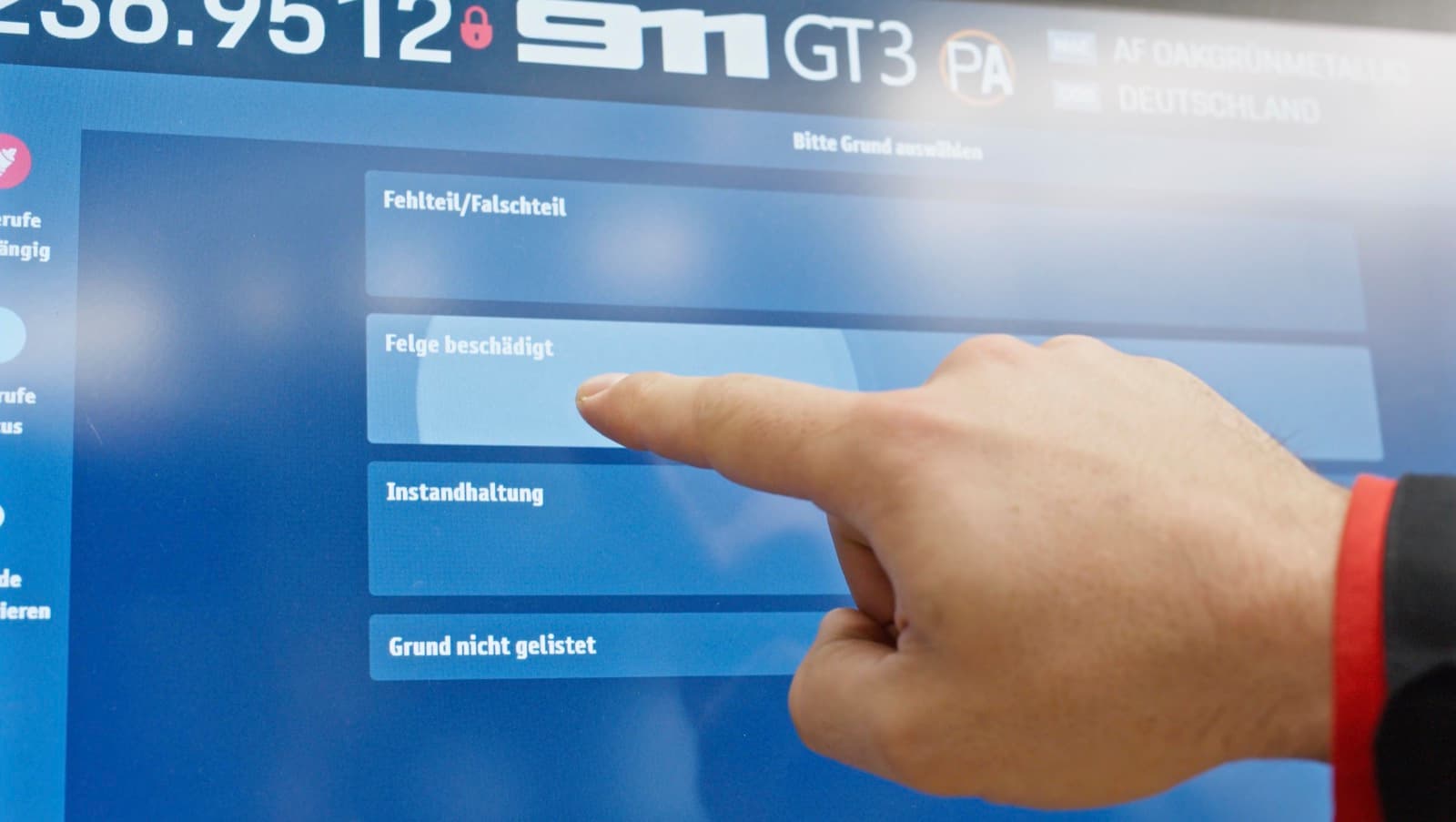
Workerbase attaches the execution record, not just the inspection outcome, to every NCR: which station, which shift, which operator, what the machine state was, what the prior incident history on that part number looked like. A quality engineer doing root cause analysis works from what happened, not from what someone remembers at the end of the shift.
The underlying cause is rarely a single bad engineer. LNS Research's manufacturer survey found that 78% of companies report a quality management disconnect: quality data living in a system separate from the execution data that explains why a defect happened. A corrective action written against disconnected data is a guess with a signature on it.
What does a corrective action actually need to prove, beyond a signature?
A corrective action needs to prove the condition that caused the defect no longer exists, which is a different and harder claim than proving a form was filled in. D5 and D6 of the 8D method exist to separate "we implemented a fix" from "we verified the fix works," and that second step is where most quality systems quietly stop, because a signature on a CAPA form proves someone did something, not that the next hundred parts came out right.
| What gets checked | Paper / signature-based close-out | Execution-linked close-out |
|---|---|---|
| Fix implemented | Self-reported by the responsible engineer | Logged automatically when the workflow step changes |
| Fix verified | Assumed from the next scheduled audit | Tied to the next N production runs of that part |
| Recurrence check | Manual, if anyone remembers to look | Auto-scheduled against the specific station and part number |
| Evidence at next audit | Reconstructed from memory and email threads | Pulled directly from the execution record |
How do you catch a recurring defect before it reaches three more shifts?
You catch it by making the escalation automatic instead of dependent on an operator's judgment call, because the gap between detection and escalation is where most of the cost of a repeat NCR actually accumulates. A defect found at final inspection after three shifts already ran with the same condition is really an escalation failure at the first station, not a detection failure at the final one. Quality at the point of work means the check happens inline, in the production workflow itself, and a failed check triggers a predefined escalation path rather than leaving the call to whoever is standing at the station.
This matters most in asset-heavy process manufacturing, where a quality hold loops straight back into the process that made the batch rather than just logging a form. A failed lab result routes back to re-dosing or re-dispersing the batch still in process, instead of sitting in a filing cabinet until someone reads it.
Why does effectiveness verification keep failing on audit?
Because most quality systems have no mechanism that checks itself, so the step depends entirely on someone remembering to look. Among manufacturers audited against IATF 16949, reviewing the effectiveness of corrective actions is specifically called out: one analysis of 2025 AIAG Quality Summit data found that this single clause, 10.2.1(d), accounts for 60.45% of all nonconformances written against corrective-action handling, with inconsistent execution and absent verification procedures as the recurring objective evidence. Root cause, review after review, comes back to weak monitoring and follow-up: not a bad corrective action at the time it was written, but nobody checking afterward whether it held.
That gap is expensive even before an audit finds it. ASQ's 2025 Cost of Quality Insights Report puts the cost of poor quality at 15–20% of annual sales for many manufacturers, and as high as 40% in the worst-performing plants, and a defect that recurs because the effectiveness check never happened is, by definition, a cost the plant is paying twice for the same root cause.
How do you build an NCR process that schedules its own follow-up?
You build the follow-up into the workflow itself, so it fires on a date and a part number rather than on someone's memory. The fix for an effectiveness check that depends on human recall is to stop depending on human recall: when a corrective action closes, the next verification (a targeted inspection, a layered process audit, a batch review) gets scheduled automatically against the specific line, station, and part number the NCR named. If that check is missed, it escalates the same way a skipped production-line inspection would, instead of quietly falling off a spreadsheet.
Layered process audits already give plants a structure for recurring verification; the gap most plants have is that LPA scheduling and NCR effectiveness checks live in different systems, so a corrective action's own verification step never actually joins the audit calendar. Running both through the same workflow engine closes that gap: the NCR that closed last month is the reason this month's audit checklist includes that specific station.
What does this look like in a real plant?
Dantherm, an HVAC and climate technology manufacturer, cut unplanned production stops caused by quality issues by 36% after moving quality checkpoints into the production workflow instead of a parallel paper system, with full traceability from the workstation back to ERP. Across Workerbase deployments more broadly, a quality-focused rollout centered on reduced scrap and rework has produced €1.3M a year in cost savings from roughly a 9% productivity improvement at a single plant, the kind of number that comes from NCRs actually staying closed instead of the same ones getting worked twice.
Common mistakes that keep NCRs recurring
- Treating the corrective action as finished at sign-off. A signature closes the form. It does not close the gap unless someone checks the next production run against it.
- Writing the root cause from the loudest symptom. The defect an operator reports is the clue, not the cause, and skipping root cause analysis to retrain on the visible step instead of the underlying condition is the single most common reason a defect returns.
- Scheduling the follow-up audit manually, if at all. An effectiveness check that depends on someone remembering to put it on a calendar is a check that gets missed on a busy quarter.
- Letting the NCR arrive without station-level context. A defect reported as "this looks wrong" with no station, operator, or machine state attached gives an engineer nothing to actually investigate.
- Running quality checks and the production line on separate systems. When quality data lives in a parallel system from execution, the corrective action is working from a reconstruction instead of a record.
Frequently Asked Questions
What's the difference between an NCR and a CAPA?
An NCR (non-conformance report) documents that a specific part, batch, or process deviated from specification at a specific point in time. A CAPA (corrective and preventive action) is the structured response: identify the root cause, implement a fix, and verify it prevents recurrence. An NCR without a CAPA records the defect. A CAPA without effectiveness verification just records an intention.
How long should you wait before verifying a corrective action worked?
Long enough to run the condition that caused the defect at least once more under normal production, not just a single good part immediately after the fix, which proves nothing about variation across a shift or a changeover. Tie the verification to a production count or a time window specific to that part number rather than a fixed calendar date, so a low-volume part still gets checked before the next run rather than on an arbitrary schedule.
Why do 8D corrective actions fail even when every discipline is documented?
Because documentation and effectiveness are different claims: a completed D1 through D8 with no gap in the paperwork can still fail if D4's root cause was never truly isolated, meaning the team found a contributing factor and stopped looking once a plausible fix was identified, so the paperwork passes while the defect returns anyway.
Does automating NCR escalation reduce the number of non-conformances, or just how fast they're found?
Both, over time. The immediate effect is detection speed: a defect found at the station instead of three shifts later. The compounding effect is fewer repeats, because faster detection means faster containment, and a corrective action based on fresh execution data (station, operator, machine state, timestamp) is more likely to find the real root cause than one reconstructed from memory a week later.
What's the fastest way to show auditors that corrective actions actually get verified?
Make the verification step part of the execution record rather than a separate file an auditor has to request. If an effectiveness check is logged automatically, linked to the NCR it followed from, the part number, and the specific inspection that confirmed the fix held, an audit becomes a report pull instead of the reconstruction exercise most quality systems still require, where an auditor has to take the fix's effectiveness on faith.
Can this work without replacing our existing QMS?
Yes. The QMS stays the system of record; Workerbase becomes the source feeding it with execution-level context (station, step, operator, timestamp, photos) instead of information filled in from memory at the end of a shift. 100+ out-of-the-box integrations connect to SAP, Siemens, and most existing QMS platforms without a migration project.