Best Practices for Guided Troubleshooting That Compresses MTTR
Share article
Quick answer: Guided troubleshooting compresses MTTR only when it's built to five specific practices: bind every answer to the asset in front of the technician, source every suggestion, escalate automatically when the history runs out, capture the resolution afterward, and route escalations by skill, not availability. Skip one and a fast demo becomes an unreliable system once it's running on more than one line.
A guided-troubleshooting demo is easy to make impressive. Getting it to move MTTR once it's running across every shift and every line, inside a real maintenance management program, is a different problem, and it's the one this piece is about. AI machine troubleshooting covers what the capability is; this is what makes it hold up once the team that approved the pilot wants to see the number move.
The gap between the two is specific, not vague. A system that answers well for a technician watching a demo and a system a Head of Maintenance will trust across a plant differ in exactly five ways, and each one is testable before you commit to a rollout.
What makes guided troubleshooting reliable enough to compress MTTR?
Guided troubleshooting compresses MTTR when the answer it gives is grounded in the specific asset in front of the technician, not a plant-wide manual search. The system has to be bound to that machine's own documentation and repair history, every suggestion has to be sourced and auditable, and it has to escalate cleanly the moment that history runs out.
Each of those is a design decision, not a feature you add later. A system built on a generic knowledge base can be pointed at better data, but it can't retroactively gain a concept of "this specific asset" if that wasn't the unit it was built around from the start.
Why do most guided-troubleshooting pilots stall before they reach production?
Most pilots stall because a system that answers well in a demo has no mechanism for knowing when it's wrong, no record of what the technician did with the suggestion, and no owner once it's deployed across more than one line. Fraunhofer's research puts the AI project scaling failure rate at 80%, and the failures are rarely about whether the model gives a good answer in testing.
NIST's AI Risk Management Framework names the failure mode directly: a system that performs well on familiar inputs often has no defined behavior for the fault it hasn't seen before, which on a shopfloor means a confident, wrong answer with nothing flagging it as uncertain. A demo rarely runs long enough to hit that case. A plant running the system on every shift hits it in the first week.
What are the five practices that separate production-grade guided troubleshooting from a demo?
Bind every answer to the asset in front of the technician. Not a plant-wide search across every manual, a query scoped to this machine's identity: its OEM documentation, its own repair history, nothing from a different line that happens to share a model number.
Source every suggestion. The technician should see where an answer came from, which manual page, which past repair, so they can verify it rather than trust it on faith. An unsourced answer is a guess wearing a confident tone.
Escalate automatically when the history runs out. If nothing on record covers this fault, the system routes to a certified technician instead of extrapolating a plausible-sounding fix. A wrong confident answer costs more than an honest "I don't have this one."
Capture the resolution, not just the question. What the technician did becomes the next technician's history. A system that logs the question and the suggestion but never the outcome never compounds; it's answering the same question cold every time.
Route the escalation by skill, not availability. Sending the fault to whoever's free instead of whoever's certified on that asset just moves the bottleneck one person over, and the technician who gets it is now troubleshooting blind too.
How do you measure whether guided troubleshooting is compressing MTTR?
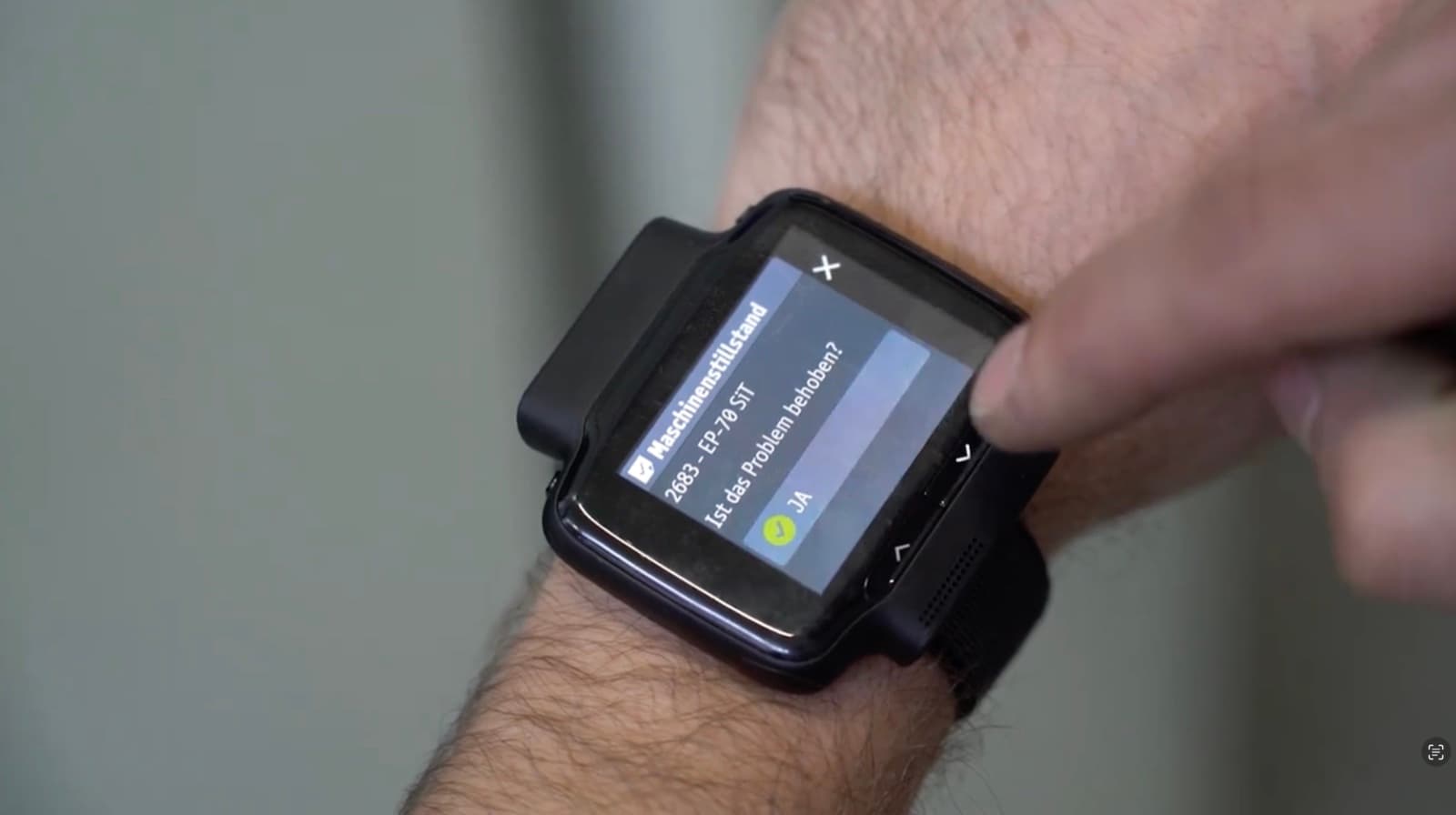
Measure alarm-to-resolution time against a before-and-after baseline on the same asset, not against a plant average. Guided troubleshooting built this way already runs in production at a major automotive manufacturer, surfacing fault history and repair guidance at the point of failure rather than as a reference document someone has to go find.
Platform-level evidence backs the same pattern: customers have measured €1.2M in annual avoided downtime from a single maintenance use case on one plant, and go-live on a first line typically runs two weeks, with measurable impact inside 30 days. If a pilot can't show movement on alarm-to-resolution time within that window, the issue usually traces back to one of the five practices above, most often the missing escalation path or the missing resolution write-back.
What's the difference between this and a generic AI chatbot pointed at your manuals?
A generic chatbot answers from whatever documents it was given, with no concept of which specific machine is asking or whether the answer is current. AI governance in manufacturing is what turns that into a system a plant manager will rely on: approval before anything reaches a worker's device, a record of what ran, and a human able to override it.
ISO 42001 formalizes what a governed AI management system should include, and the practices in this piece are the maintenance-specific version of that same discipline: scope the system to what it knows, make its reasoning checkable, and never let it answer past the edge of its own data. A rollout that gets fault history to the technician before they arrive is the other half of this story.
Frequently Asked Questions
Does guided troubleshooting replace a technician's judgment?
No. It narrows what the technician is looking at and surfaces the most relevant prior fix, drawn from this specific asset's own history, but the technician still decides what to do and can override the suggestion at any point. The system's job is to shorten how long it takes to form a correct judgment, not to replace the person making it.
What happens when the system doesn't know the answer?
It should say so and escalate to a certified technician rather than guess. A system that always produces an answer, even for a fault it has no history on, is the version that erodes trust the first time it's confidently wrong, and one bad confident answer undoes a dozen good ones.
Do we need a large repair history before this works?
It helps, but you don't need years of data to start. A new deployment begins with whatever OEM documentation exists and builds real repair history with every resolved alarm after that, so the asset with the most frequent faults becomes genuinely useful within the first few weeks rather than the first few years.
Can this run on top of our existing CMMS data?
Yes. The asset register and work order history can stay in SAP PM, Maximo, or Infor EAM exactly as they are today. Guided troubleshooting reads from that existing record by asset ID rather than requiring a separate data migration or a parallel system before it can answer anything at all.
How do we know the system is staying within its boundaries over time?
Every suggestion stays sourced and logged, so a review of what the system has been recommending is a report pull, not an investigation. If the source attached to an answer stops making sense, that's the signal the scope has drifted and needs a review.
Ready to see guided troubleshooting running against your worst-performing asset? Request a Workerbase demo.